

Key Takeaways
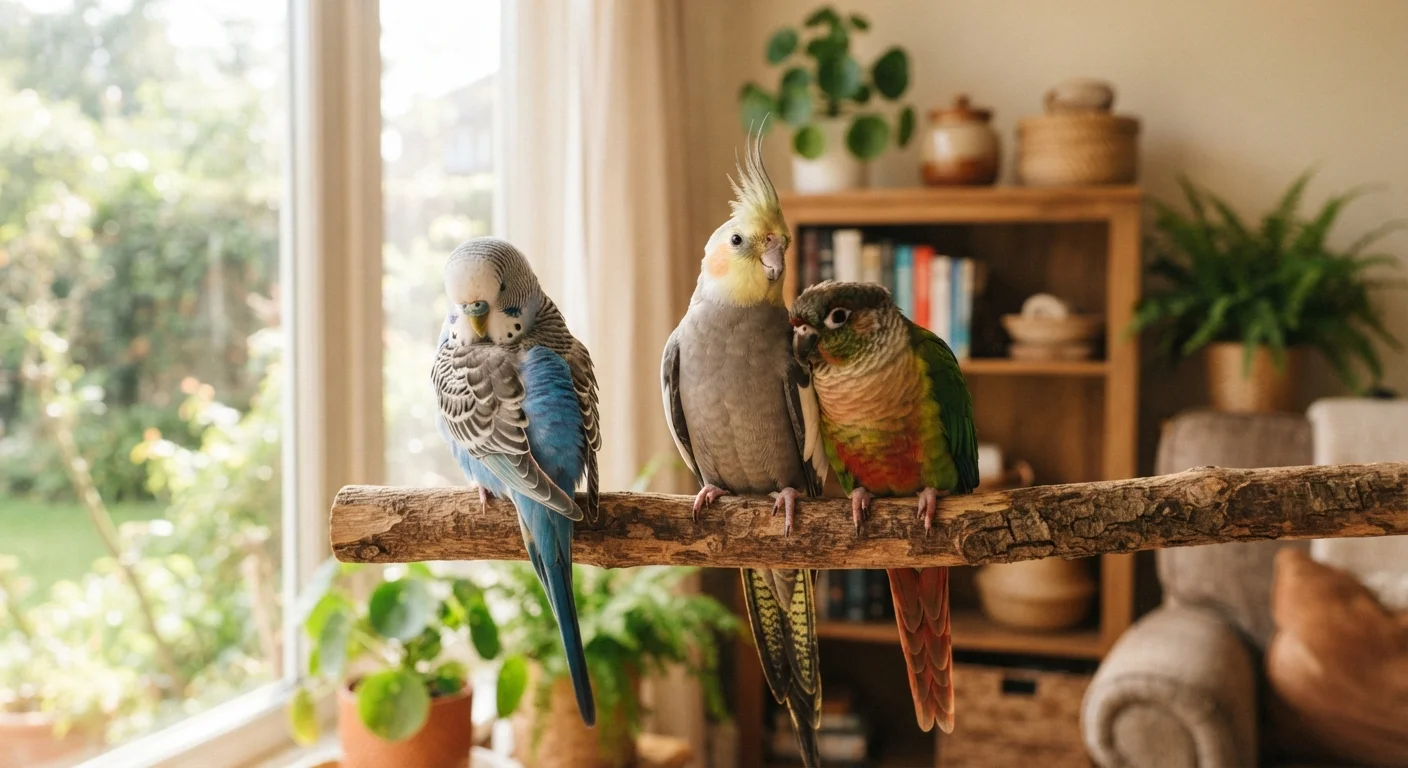
- Budgies are the quietest and most low-maintenance of the three, making them ideal for first-time bird owners.
- Cockatiels are affectionate and moderately vocal, striking a strong balance between companionship and manageability.
- Conures are the loudest and most demanding, best suited to experienced owners who can offer hours of daily interaction.
- All three species require more social engagement, space, and enrichment than most new owners anticipate.
- Noise tolerance, living space, and daily schedule are the most important factors when choosing between these birds.
Our Verdict
Budgies, cockatiels, and conures each suit a different type of household. Budgies reward patient, quieter homes; cockatiels thrive with attentive owners who want a true companion bird; conures belong with experienced, energetic owners ready for a bold personality. None of these birds are truly low-effort pets, but the right match can be an extraordinarily fulfilling relationship.
| Best for | Recommended |
|---|---|
| First-time bird owners or apartment dwellers | Budgie |
| Those seeking a cuddly, interactive companion bird | Cockatiel |
| Experienced owners with ample time and sound-tolerant households | Conure |
| Families wanting a social bird with manageable noise | Cockatiel |
Why Species Choice Matters More Than You'd Expect
Choosing a pet bird often starts with appearance - a flash of color, a charming chirp at a friend's house - but the species you bring home shapes nearly every aspect of daily life with that bird. Noise levels, affection style, lifespan, and how much hands-on time the bird needs all vary significantly between even closely related parrots.
Budgies (also called parakeets), cockatiels, and conures are three of the most popular pet birds in the United States, and they're frequently lumped together as "small parrots." In practice, they sit at very different points on the noise, sociability, and commitment spectrum. Before committing, it's worth reading about what bird ownership really involves beyond the charming surface.
Also be aware that several common myths about pet birds can lead new owners to underestimate care needs - sometimes with real consequences for the animal's health.
Budgies: Small Bird, Big Personality
Budgerigars are the most widely kept pet bird in the world, and for good reason. They're compact, relatively quiet compared to other parrots, and can learn to mimic words and whistle tunes with surprising clarity. A well-socialized budgie that is handled regularly from a young age can become genuinely affectionate, though they tend to bond more loosely than larger parrots.
Their smaller size means cage requirements are more manageable, but "manageable" doesn't mean minimal. Budgies are active, curious birds that need room to move, daily foraging enrichment, and ideally a companion - they're highly social in the wild and can become stressed when kept alone without sufficient human interaction.
Noise-wise, budgies chirp and chatter almost continuously during waking hours, but the volume is low enough that most apartment buildings and shared walls can tolerate it. Their lifespan typically runs 7-12 years, so ownership is still a meaningful long-term commitment.
| Budgie | Cockatiel | Conure | |
|---|---|---|---|
| Noise Level | Low - soft chattering | Moderate - contact calls | High - can be very loud |
| Affection Style | Friendly, loosely bonded | Cuddly, strongly bonded | Intensely attached, velcro-like |
| Typical Lifespan | 7-12 years | 15-20 years | 15-25 years |
| Beginner Friendliness | High | Moderate to high | Low to moderate |
| Daily Interaction Needed | Moderate | Moderate to high | High - essential |
| Apartment Suitability | Good | Generally manageable | Challenging (varies by species) |
Cockatiels: The Companion Bird Middle Ground
Cockatiels occupy a sweet spot that makes them perennially popular with both beginners and experienced bird keepers. They're noticeably larger than budgies, with more expressive crests and a reputation for being among the most affectionate small parrots available. Many cockatiels actively seek out head scratches, will whistle back-and-forth with their owners, and enjoy simply perching nearby during daily routines.
Their vocalizations are louder than budgies - the classic cockatiel contact call can carry through a house - but they don't approach the shrill intensity of conures. Males tend to be more vocal and song-driven; females are often quieter. Cockatiels live 15-20 years on average with proper care, which means adopting one is a decades-long relationship.
Find an Avian Vet Before You Bring a Bird Home
Not all veterinary practices see birds, and avian medicine requires specialized training. Locate an avian-experienced vet in your area before adopting any parrot species. A wellness check within the first week can catch issues that aren't obvious to new owners, and establishing care early means you have a trusted resource if problems arise later.
Diet matters significantly for cockatiels: a seed-only diet is nutritionally inadequate and linked to health problems. Pellets, fresh vegetables, and limited fruit should form the bulk of their meals, according to avian veterinary guidance.
Conures: High Energy, High Reward
Conures are a broad group - green-cheeked conures tend to be calmer and quieter, while sun conures and jenday conures are famously, ear-splittingly loud. All conures share a playful, mischievous temperament and a strong need for daily interaction. Owners consistently describe them as "velcro birds" - they want to be on or near their person as much as possible.
That attachment is endearing, but it creates real demands. A conure that doesn't receive enough stimulation and social time can develop feather-destructive behaviors or screaming habits that are difficult to walk back. They are not well-suited to busy households where the bird will spend most of the day alone.
If you live in an apartment or have noise-sensitive neighbors, a sun or jenday conure is likely not a realistic choice. A green-cheeked conure is worth considering if you want the conure personality with meaningfully lower decibel output. All conures typically live 15-25 years, making the commitment substantial.
If you're still exploring whether a bird is the right pet altogether, comparing the decision to other small-pet choices can help - for instance, see how the considerations differ when choosing between a hamster and gerbil.
Practical Factors to Weigh Before You Decide
Beyond personality, several practical household factors should guide your choice:
- Noise tolerance: Budgie < Cockatiel < Conure (with significant variation by conure species)
- Daily time commitment: All three need out-of-cage time and interaction, but conures demand the most
- Lifespan: Budgies 7-12 years; cockatiels and conures 15-25 years
- Household activity level: Conures thrive in engaged, interactive homes; budgies adapt better to calmer environments
- Housing size: Larger cages benefit all three, but conures especially need space to climb and explore
If your home environment suits a bird, make sure your setup is ready before the animal arrives. The first-week readiness checklist covers supplies, space setup, and routine planning that applies directly to new bird owners. For those in smaller spaces, it's also worth reviewing which small pets generally adapt to apartment living before making a final decision.
This article is for general informational purposes only. For health concerns or dietary guidance specific to your bird, consult a licensed avian veterinarian.