

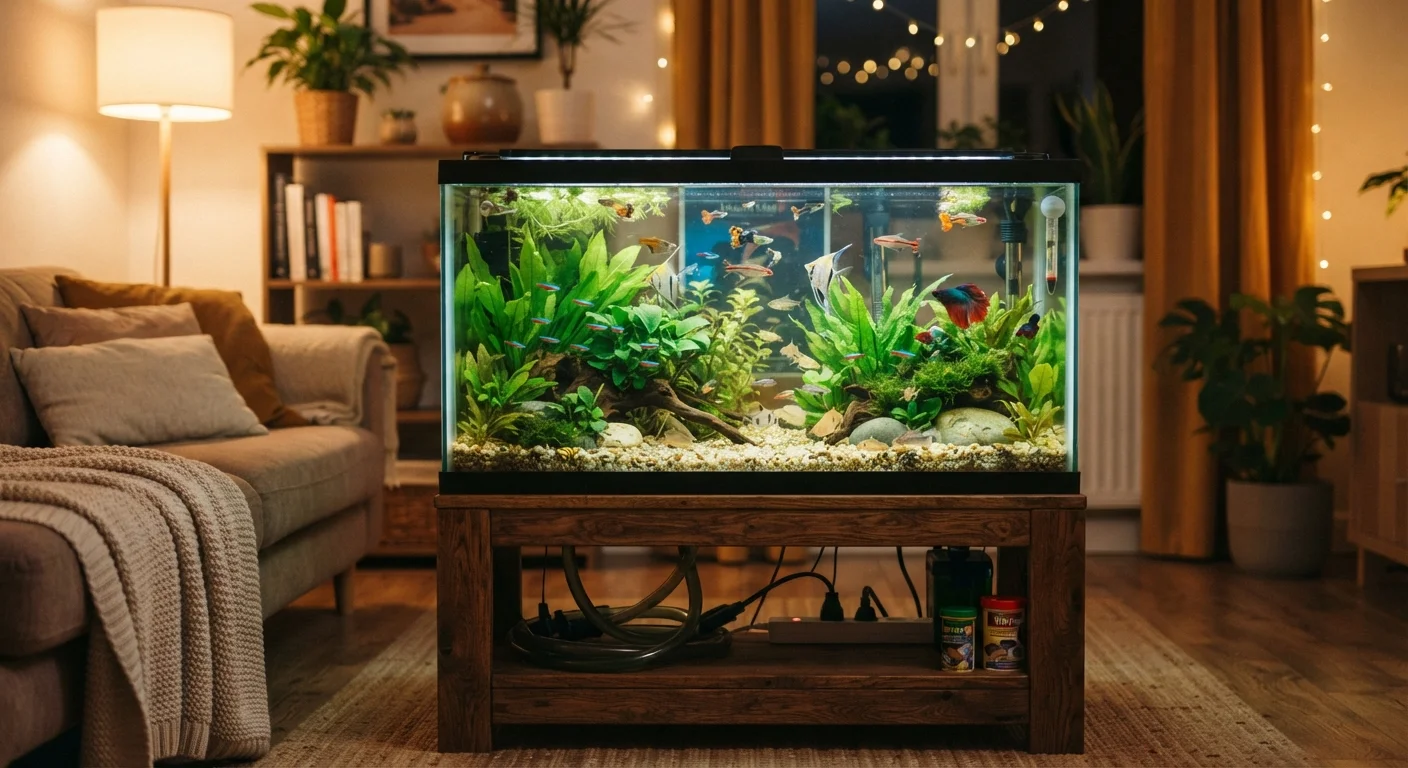
Key Takeaways
- Bigger tanks are often easier for beginners because water parameters stay more stable.
- The nitrogen cycle must complete before adding fish - rushing this step causes most early fish deaths.
- A filter, heater, thermometer, and water test kit are non-negotiable essentials.
- Not all fish can share a tank - research compatibility before purchasing any species.
- Weekly partial water changes (around 25%) are the cornerstone of long-term tank health.
Why Fishkeeping Is More Involved Than It Looks
Fish are often marketed as low-maintenance pets, but a healthy aquarium is actually a carefully balanced ecosystem. Unlike a dog or cat, fish communicate stress and illness almost entirely through subtle behavioral and physical changes - making early mistakes easy to miss and sometimes fatal.
The good news: most beginner failures are predictable and preventable. Understanding a handful of core concepts before you purchase anything will save you money, frustration, and fish lives. If you're curious how fishkeeping compares to other first-time pet experiences, our guide on setting up for a first cat offers a useful contrast.
Before buying any fish, run your tap water through a basic test kit to know your starting pH and hardness - then choose species that naturally thrive in those conditions rather than fighting your water chemistry.
Trying to chemically alter water parameters is an advanced skill that introduces instability; matching fish to your existing water is a far more reliable strategy for beginners.
When cycling a new tank, add a small pinch of pure ammonia (unscented) every two to three days to feed the developing bacterial colony - this 'fishless cycling' method is more humane and often more reliable than using live fish.
Fishless cycling protects fish from harmful ammonia spikes and typically produces a more robust bacterial colony before any animals are introduced.
Choosing the Right Tank Size
Counter-intuitively, larger tanks are generally easier to maintain than small ones. A 20-gallon tank dilutes waste, temperature swings, and chemical imbalances far better than a 5-gallon bowl. Most experienced fishkeepers recommend a minimum of 10-20 gallons for a first setup.
Consider where the tank will live before buying: a filled 20-gallon tank weighs over 200 pounds, so furniture and flooring matter. Also factor in access to electrical outlets for filters and heaters, and proximity to natural light sources, which can promote unwanted algae growth.
Start With a 20-Gallon Tank
If you're torn between tank sizes, a 20-gallon long tank is widely considered the sweet spot for beginners - large enough to keep water parameters stable, but small enough to manage on a budget. It gives you room for a small community of fish without overwhelming you with maintenance.
Understanding the Nitrogen Cycle
The nitrogen cycle is the single most critical concept in fishkeeping. Fish waste produces ammonia - a compound that is toxic even in small concentrations. Beneficial bacteria that colonize your filter convert ammonia first into nitrite (also toxic) and then into nitrate (far less harmful). This process, called cycling, takes four to eight weeks in a new tank.
Adding fish before the cycle completes exposes them to ammonia and nitrite spikes, which is the leading cause of early fish death. You can monitor progress with an aquarium water test kit that measures these parameters. For a deeper look at this process, see our dedicated article: the nitrogen cycle explained for new aquarium owners.
4-8 weeks
Typical time to fully cycle a new aquarium
Aquarium cycling timelines vary based on temperature, ammonia source, and whether beneficial bacteria are seeded from an established tank.
~90%
Of new fish deaths linked to water quality issues
Fishkeeping educators commonly attribute the vast majority of early livestock losses to preventable water parameter problems rather than disease.
Essential Equipment You'll Need
Before adding a single fish, make sure you have the following in place:
- Filter: Mechanical, biological, and chemical filtration all matter. Choose a filter rated for your tank size or slightly larger.
- Heater: Most tropical freshwater fish require water between 72-82°F. A submersible heater with an adjustable thermostat is standard.
- Thermometer: Heaters can malfunction; a separate thermometer lets you verify temperature independently.
- Water test kit: Liquid test kits are more accurate than strips and measure ammonia, nitrite, nitrate, and pH.
- Lighting: Adequate light supports plant growth and natural fish behavior; avoid leaving lights on 24 hours, which stresses fish.
- Substrate and décor: Gravel or sand provides surfaces for beneficial bacteria and shelter for fish.
Deciding between freshwater and saltwater will shape every equipment choice you make. Our overview of freshwater vs. saltwater aquariums can help you commit to a direction before spending money.
Choosing Compatible Fish Species
Not every fish can share a tank. Incompatible species may fight, compete for territory, eat each other, or require vastly different water parameters. Before selecting fish, research three things: adult size, temperament, and preferred water conditions (pH, temperature, hardness).
Good starter fish for freshwater tanks include species such as platies, danios, and corydoras catfish - all relatively hardy and peaceful. Avoid pairing slow-finned fish with known fin-nippers, or combining species that require very different temperatures. Overstocking is one of the most common beginner errors; a general guideline is one inch of adult fish per gallon, though this is a rough rule, not a guarantee. If fish deaths occur despite your best efforts, our article on why fish keep dying walks through the most common causes.
Ongoing Care and Maintenance
A healthy tank requires consistent upkeep. Plan for the following routine tasks:
- Weekly water changes: Replace approximately 25% of tank water with dechlorinated water of the same temperature. This dilutes nitrates and replenishes minerals.
- Filter maintenance: Rinse filter media monthly in removed tank water - never tap water, which kills beneficial bacteria.
- Glass and substrate cleaning: Use an algae scraper for glass and a gravel vacuum during water changes to remove debris.
- Daily observation: Watch fish for changes in behavior, appetite, or appearance. Early detection of illness significantly improves outcomes.
Fishkeeping rewards patience and consistency. The first few months involve the steepest learning curve, but once a tank matures and stabilizes, maintenance becomes a manageable and genuinely enjoyable routine.
This article is for general informational purposes only and is not a substitute for guidance from a qualified aquatic veterinarian or experienced fishkeeping professional for your specific situation.