

Key Takeaways
- Have all core supplies - litter box, food, water, and a carrier - in place before your cat arrives home.
- Confine your new cat to one room at first so they can adjust without feeling overwhelmed.
- Schedule a veterinary wellness exam within the first week of bringing your cat home.
- Consistent feeding times and predictable routines help cats feel secure and reduce stress behaviors.
- Avoid common mistakes like forcing interaction or skipping the scratching post - both matter early on.
Start here
Essential Supplies to Have Ready
Next
Setting Up Your Space
Then
The First Vet Visit
Finally
Building a Daily Routine
Before you go
Common First-Time Owner Mistakes
Essential Supplies to Have Ready
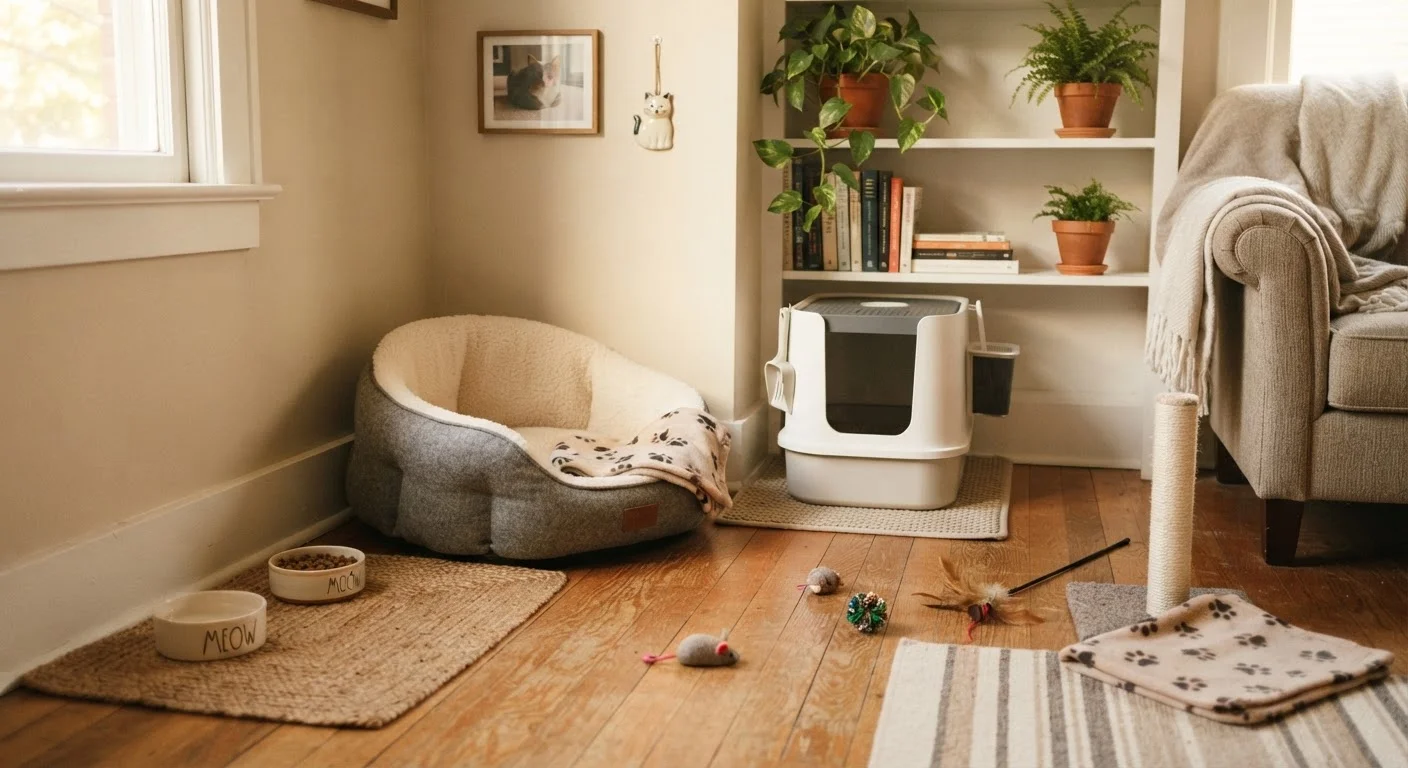
Walking through the door with a new cat and a half-empty apartment is a recipe for a stressful first night. Stock these items before pickup day:
- Litter box and litter: Unscented, clumping litter is a safe starting point for most cats. Place the box in a quiet, low-traffic area - not next to their food.
- Food and water bowls: Wide, shallow bowls reduce whisker fatigue, a common source of mealtime stress. Ceramic or stainless steel are easy to clean and don't harbor bacteria the way plastic can.
- Cat food: Match what the shelter or breeder has been feeding to avoid digestive upset. Transition to a new food gradually over seven to ten days if needed.
- Carrier: A sturdy, appropriately sized carrier is non-negotiable for transport and vet visits. Leave it out with a cozy blanket inside so your cat learns to see it as a safe spot.
- Scratching post: Cats scratch to maintain their claws and mark territory - it's a biological need, not bad behavior. A tall, stable sisal post placed near a resting spot is a good starting choice.
- Toys: A simple wand toy and a crinkle ball cover the basics. Interactive play is important for both physical exercise and bonding.
Litter box avoidance
When a cat consistently refuses to use their litter box, often due to its location, cleanliness, type of litter, or a medical issue.
Whisker fatigue
Discomfort caused when a cat's sensitive whiskers repeatedly touch the sides of a narrow food or water bowl, which can discourage eating or drinking.
Base camp
A single, quiet room where a new cat is initially confined to decompress and adjust before being given access to the full home.
Life stage nutrition
The idea that cats have different dietary needs depending on whether they are kittens, adults, or seniors - reflected in food labeled for each stage.
Vertical space
Elevated areas like cat trees or shelves that allow cats to observe their environment from height, which supports their natural instinct to survey their territory and retreat when stressed.
Wellness exam
A routine veterinary checkup for a healthy animal that establishes a health baseline, updates vaccinations, and screens for parasites or early health issues.
If you're also setting up for other animals, our first-week readiness checklist for small pets walks through a similar process for hamsters, rabbits, and birds.
Setting Up Your Space
Environment setup is just as important as the supply list. New cats are easily overwhelmed, so structure your home to give them a sense of control during the adjustment period.
Start with one room. Choose a quiet bedroom or spare room as your cat's base camp. Equip it with their litter box, food, water, a sleeping spot, and a few toys. Let them explore and settle in this space before opening access to the rest of the home - typically over several days to a couple of weeks, depending on the cat's confidence level.
Identify and cat-proof hazards. Check for loose electrical cords, toxic houseplants (common culprits include lilies, pothos, and philodendron), small objects that could be swallowed, and gaps behind appliances where a curious cat could get stuck. Secure cabinet doors in the kitchen and bathroom.
Vertical space matters. Cats feel safer when they can observe from height. A cat tree or cleared shelf gives your cat a vantage point and a retreat - especially useful if children or other pets share the home.
Give Your Cat a Quiet First Night
Resist the urge to invite friends over to meet your new cat on the first day. A calm, low-stimulation environment on night one helps your cat start building positive associations with their new home. Keep voices gentle and movement slow, and let them set the pace for exploration.
If you already have a cat at home, the introduction process deserves its own careful plan. Our guide on introducing a new cat to a household that already has one walks through a step-by-step approach to reduce conflict.
The First Vet Visit
Schedule a wellness exam within the first week, even if your cat comes with shelter veterinary records. This visit accomplishes several things at once:
- Establishes a health baseline your vet can reference in the future
- Confirms that vaccinations are current and sets a schedule for boosters
- Checks for parasites - fleas, ear mites, intestinal worms - that may not be visually obvious
- Gives you the opportunity to ask feeding, behavior, and routine questions from a qualified source
Bring any paperwork from the shelter or breeder, including vaccination history and any prior diagnoses. If your cat isn't already spayed or neutered, your vet can advise on timing.
Choosing a veterinarian before your cat arrives - rather than searching under stress - is worth the extra planning. Ask neighbors or local community groups for recommendations, and confirm the clinic accepts new patients.
This article provides general information for educational purposes only and is not a substitute for professional veterinary advice. Always consult a licensed veterinarian for guidance specific to your pet's health.
Building a Daily Routine
Cats are creatures of habit. A predictable daily structure reduces anxiety and makes problem behaviors - like nighttime yowling or litter box avoidance - less likely to develop.
Feeding schedule: Feed at the same times each day rather than leaving food out all day (free-feeding). Most adult cats do well with two meals. Your vet can advise on portion sizes based on your cat's age, weight, and activity level.
Play sessions: Aim for at least two 10-15 minute interactive play sessions daily, particularly for younger cats. Structured play burns energy and reduces destructive behavior.
Litter box maintenance: Scoop at least once daily. Cats are fastidious and will often avoid a dirty box, sometimes choosing your laundry basket instead.
Grooming: Even short-haired cats benefit from occasional brushing to reduce shedding and hairballs. Our guide to grooming a cat at home without the struggle covers brushing, nail trims, and ear checks in practical detail.
If you're expecting a baby soon, routine adjustments will be important - our article on bringing a new baby home when you have a cat covers how to prepare both your pet and your space.
Common First-Time Owner Mistakes
Avoiding these missteps in the first few weeks can meaningfully improve your cat's adjustment and your relationship with them:
- Forcing interaction too soon
- Let your cat come to you on their terms. Reaching into hiding spots or holding a reluctant cat reinforces fear rather than trust.
- Skipping the scratching post
- Cats without an appropriate outlet will scratch furniture. Place posts near sleeping spots and wherever your cat seems interested in scratching.
- Using the wrong litter or box placement
- Covered boxes, heavily scented litters, and locations near appliances or high-traffic zones are common reasons cats reject their box.
- Delaying the vet visit
- Health problems caught early are almost always easier and less costly to address. Don't wait for visible symptoms to schedule that first exam.
- Assuming a quiet cat is a happy cat
- Hiding, reduced appetite, and limited movement in a new cat are normal for a few days, but if these persist beyond a week or two, a vet check is warranted.
Getting the basics right from day one sets a strong foundation. For a sense of how cat ownership compares to other first-time pet experiences, your first dog: what to expect in the early weeks at home offers a useful parallel perspective.