

Key Takeaways
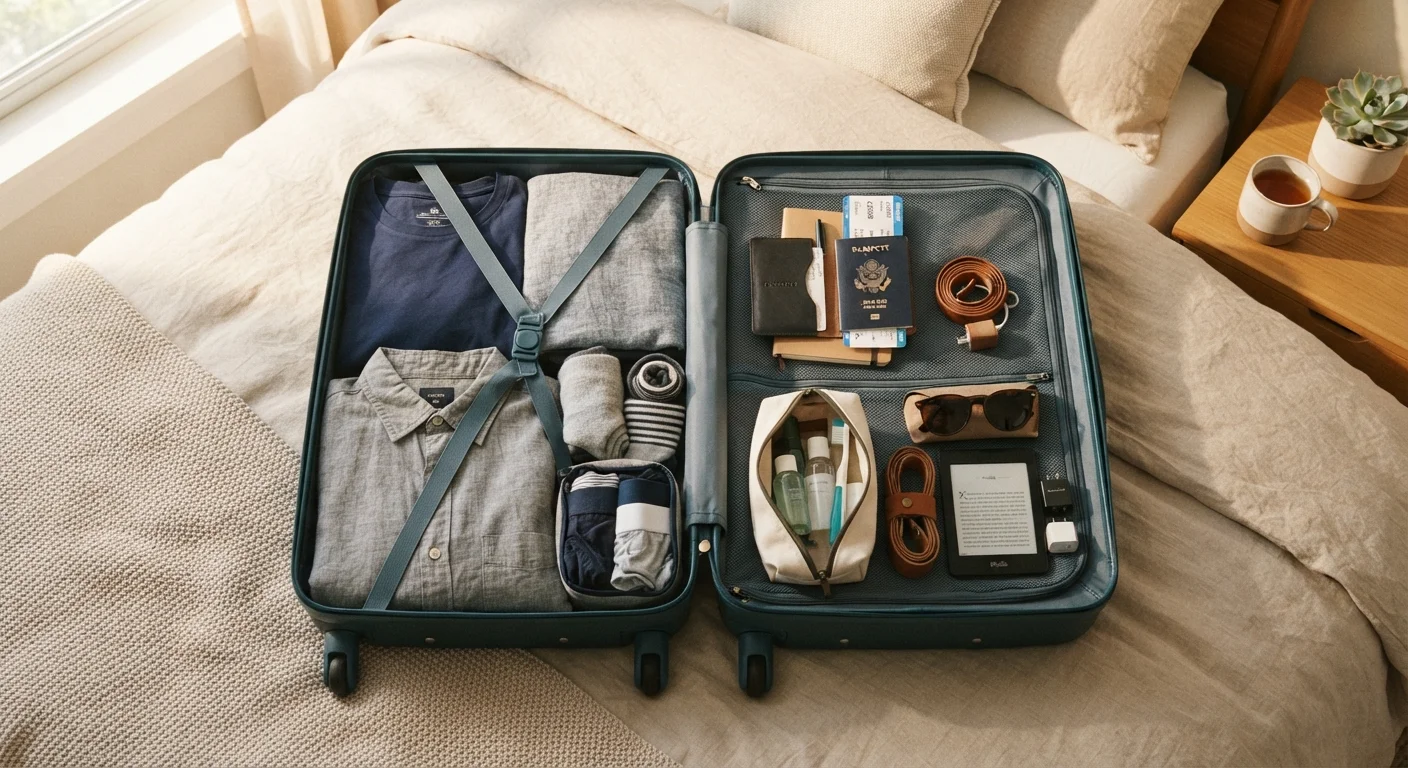
- Building around a core wardrobe of mix-and-match pieces works for trips of any length.
- The longest trip you can take with a carry-on is a matter of laundry strategy, not bag size.
- Packing by category - not by day - prevents overpacking and keeps you adaptable.
- Your accommodation type directly influences how much you need to bring.
- A written packing list refined across trips is one of the most underrated travel tools.
Why Most Packing Problems Come From the Same Mistake
Most travelers pack for the worst-case scenario of every day. They imagine a rainy day, a formal dinner, a cold snap, and a beach afternoon - and pack for all of them simultaneously. The result is an overstuffed bag that's heavy to carry, slow to navigate, and stressful to manage.
A more durable approach is to pack for what's likely, not what's possible. That means reviewing your actual itinerary, checking the climate forecast, and understanding what your accommodation provides before you open a single drawer. See our guide to building a well-structured travel itinerary for help mapping out your days realistically.
The practices below apply whether you're gone for two nights or three weeks - they're principles, not rigid formulas.
~50%
Packed items left unused by average travelers
Travel industry surveys consistently suggest that roughly half of what travelers pack goes unused, particularly on trips longer than five days.
7 lbs
Average weight saved by switching to carry-on only
Travelers who shift from checked luggage to a carry-on and personal item typically reduce their load by several pounds, easing transit through airports and cities.
Core Packing Practices That Scale With Any Trip
These approaches work because they're built around flexibility rather than volume. Each one reduces the guesswork that leads to overpacking.
- Pack by category, not by day. Grouping items by type (all tops together, all electronics together) gives you a clear picture of what you actually have. Packing outfit-by-outfit inflates your count and makes it hard to spot redundancies.
- Choose fabrics that travel well. Merino wool, moisture-wicking synthetics, and wrinkle-resistant blends earn their place in any bag. Cotton, while comfortable, dries slowly and wrinkles easily - a real drawback if you're moving frequently.
- Build a core wardrobe of neutral, mix-and-match pieces. Five tops, two bottoms, and one layering piece can produce over a dozen outfit combinations if the colors are coordinated and the fabrics are lightweight.
- Apply the one-bag test before every trip. Can everything fit in a single bag without forcing it? If not, remove items until it does - then evaluate whether you've actually lost anything essential.
- Keep a running packing list across trips. After each trip, note what you didn't use and remove it from your template for next time. A list refined over several trips becomes one of your most reliable planning tools.
Use the 1-2-3-4-5-6 Rule as a Starting Point
A common lightweight packing framework suggests: 1 pair of shoes, 2 pairs of bottoms, 3 tops, 4 pairs of socks, 5 underwear, and 6 days between laundry. Adjust these numbers based on your destination's climate and your access to laundry. This gives you a structured baseline rather than packing from scratch every time.
The Laundry Strategy Changes Everything
The single biggest lever in packing lighter for longer trips isn't a clever compression cube or a special fabric - it's a plan for doing laundry. Travelers who can wash clothes midway through a trip need far fewer items than those who must pack enough for every day.
Before you finalize your bag, look into these options at your destination:
- In-room or in-building laundry at your accommodation
- Neighborhood laundromats, which are common in most cities and often inexpensive
- Sink washing for lightweight fabrics like merino wool and synthetics, which dry overnight
Accommodation Affects What You Pack
A vacation rental with a washer/dryer changes your packing equation dramatically compared to a hotel or hostel without laundry access. Before finalizing your list, check what amenities your accommodation provides - towels, toiletries, and kitchen supplies may already be on-site. Understanding how accommodation type shapes your trip can help you plan what's truly necessary to bring.
For longer trips, planning one laundry day per week typically lets you pack for roughly four to five days of clothing rather than the full trip. This is the approach that makes carry-on travel feasible for journeys of two weeks or more.
For decisions about whether to check a bag at all, the carry-on vs. checked baggage breakdown walks through the real trade-offs in detail.
Start With Quick Wins Before Your Next Trip
You don't need to overhaul your entire packing approach at once. A few targeted changes before your next departure can make a noticeable difference in how manageable your bag feels - and how much less stress you carry through the airport.
Once your packing is dialed in, the next step is making sure the rest of your pre-departure logistics are covered. Our pre-trip checklist covers documents, reservations, and the details travelers most often overlook before departure day.
“The more you travel, the less you bring. Experienced travelers almost universally report that they pack lighter with each trip - not because they need less, but because they've learned what they actually use.”
— Travel & Trips Editorial Team, Experienced travel writers and researchers