

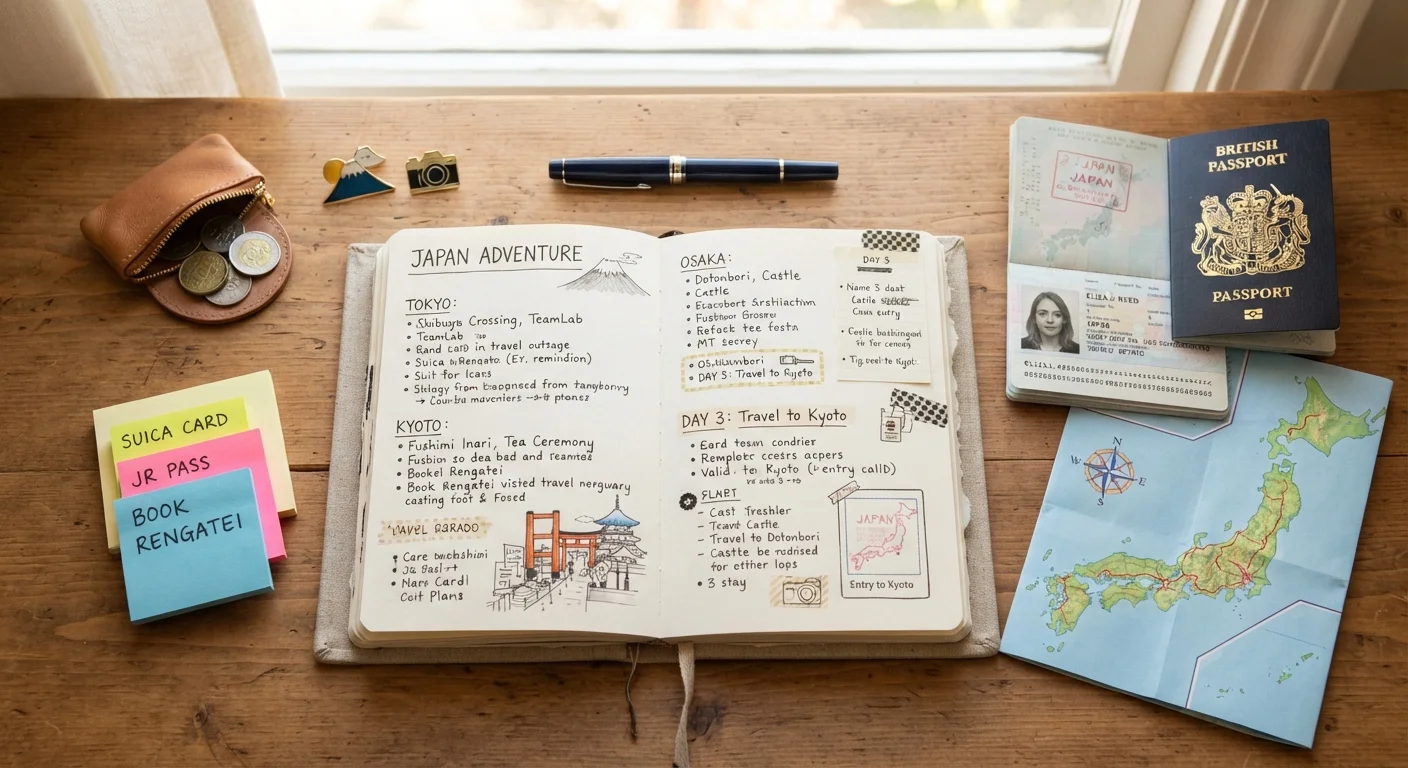
Key Takeaways
- A travel itinerary is a planning tool, not a rigid schedule - flexibility is built in by design.
- The strongest itineraries include confirmed logistics, daily activity structure, and buffer time.
- Grouping activities by neighborhood or area reduces unnecessary transit and wasted time.
- Mixing must-do anchors with open blocks gives you control without over-programming your trip.
- A written itinerary doubles as an emergency reference for accommodation addresses and confirmation numbers.
Travel Itinerary
A travel itinerary is a day-by-day plan that outlines where you'll go, what you'll do, where you'll stay, and how you'll get around during a trip. It serves as a practical reference document - not a rigid script - that helps you move through a destination with confidence. A good itinerary reduces decision fatigue on the road while leaving room for spontaneous moments.
In travel industry terms, an itinerary may also refer to a formal booking document issued by airlines or tour operators listing confirmed reservations and timings.
What a Travel Itinerary Actually Does
Many travelers think of an itinerary as a strict timetable - a source of pressure rather than a planning aid. In practice, a well-constructed itinerary does the opposite: it answers the questions you'd otherwise have to solve under stress while you're already on the ground.
At its core, an itinerary consolidates your confirmed logistics (flights, accommodation, car rentals) with a daily activity framework and an honest assessment of travel time between locations. It becomes your single reference document - the thing you check when you can't remember which hotel you booked or what time your tour starts.
For a broader view of how itinerary-building fits into the full planning process, see the end-to-end trip organizing framework that walks through every phase from idea to departure.
74%
Travelers who research before booking
According to a report by the U.S. Travel Association, a large majority of leisure travelers research their destination and activities before making any reservations.
3-5 hrs
Average daily transit time without geographic clustering
Travel planning research generally suggests that uncoordinated daily movement in unfamiliar cities can consume several hours of a traveler's day in transit alone.
The Core Components, Explained
A functional itinerary has several distinct layers, each serving a specific purpose:
- Confirmed logistics block: Flight numbers, departure and arrival times, accommodation names and addresses, confirmation numbers, and any pre-booked transportation. This section should be printable - it's your backup if your phone dies.
- Daily activity structure: A loose morning-afternoon-evening framework for each day. You don't need to schedule exact hours, but grouping activities by time of day helps with pacing and energy management.
- Geographic clustering: Group activities by neighborhood or area to minimize unnecessary transit. Spending the morning in one district and the afternoon nearby - rather than criss-crossing a city - saves time and reduces fatigue.
- Buffer time: Build at least one unscheduled window per day. Travel almost always takes longer than expected, and buffer time absorbs delays without collapsing the rest of the plan.
- Contingency notes: A short list of backup options - a museum for a rainy afternoon, a restaurant near your accommodation - so you're never starting from zero when plans change.
Your choice of accommodation also affects how you structure daily logistics, since hotels, rentals, and campgrounds each create different rhythms around check-in times and on-site amenities.
Anchors vs. Open Blocks: Finding the Right Balance
The most common itinerary mistake is over-programming - filling every hour in an attempt to "maximize" the trip. This approach tends to produce exhaustion rather than satisfaction. The counterbalance is building your days around anchors and open blocks.
Anchors are fixed, confirmed commitments: a reserved restaurant dinner, a timed museum entry, a guided tour. These are the non-negotiable elements that your day is organized around. Most days benefit from one or two anchors - rarely more.
Open blocks are intentionally unscheduled time. They're not wasted time; they're the space where the best travel moments often happen - a conversation with a local, an unexpected street market, an extended coffee break in a neighborhood you didn't plan to linger in.
One Anchor Per Half-Day Is Plenty
If you have a morning museum visit confirmed, leave the afternoon open rather than stacking another reservation immediately after. Travel moves at an unpredictable pace - lunch runs long, a gallery is more interesting than expected, someone needs a rest. One anchor per half-day gives you enough structure to feel oriented without making every delay a problem.
Getting this balance right is especially important on longer trips. If your budget planning is still in progress, the realistic travel budget guide can help you estimate costs before you lock in your activity lineup.
Putting It Together: Format and Practical Tips
Your itinerary format doesn't need to be elaborate. A simple day-by-day document - whether in a notes app, a shared spreadsheet, or a printed sheet - works well for most trips. What matters is that it's accessible and readable at a glance.
A few practices that make any itinerary more useful:
- Use local time zones throughout. Mixing time zones in a single document causes avoidable confusion, especially on multi-destination trips.
- Include address links or saved map pins. Having locations pre-saved in a maps app means you're not searching under pressure.
- Note operating hours for key attractions. Many sites are closed on specific days or require advance tickets - catching this during planning prevents disappointment on arrival.
- Keep a copy offline. A downloaded or printed version ensures access when connectivity is unreliable.
If your trip involves significant time-zone crossings, it's worth reading about how jet lag affects your body so you can build realistic energy expectations into your first day or two. And once your itinerary is set, use it to guide your packing - the packing approaches that adapt to trip length shows how your planned activities directly inform what to bring.