

Key Takeaways
- A new car typically loses 15-25% of its value in the first year of ownership.
- Depreciation is often the single largest cost of owning a car over time.
- Higher mileage, accident history, and poor condition all accelerate value loss.
- Understanding depreciation helps you make smarter decisions about buying, selling, and leasing.
- Keeping records of maintenance can help slow the pace of depreciation at resale.
Car Depreciation
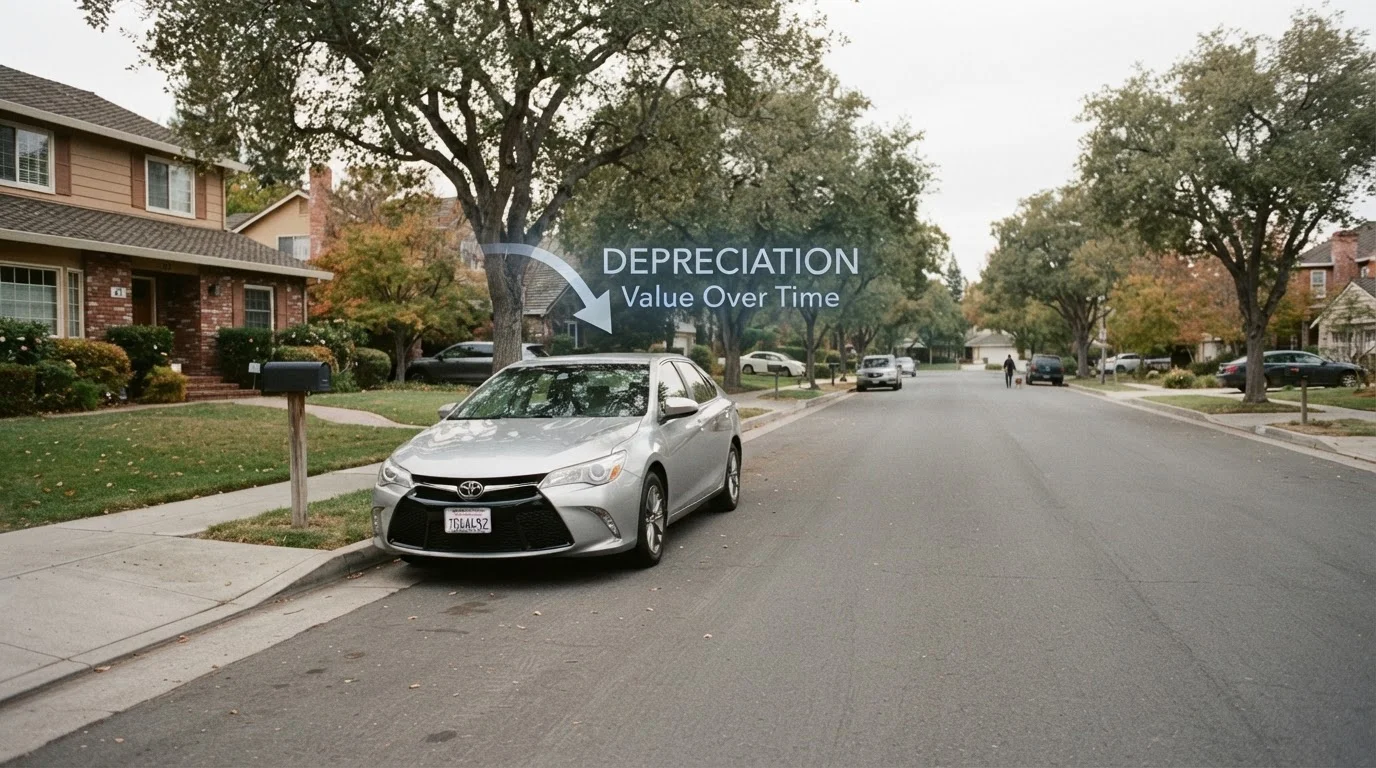
Car depreciation is the reduction in a vehicle's market value over time. Every car loses value as it ages, accumulates mileage, and faces wear - regardless of how well it's maintained. This loss in value is one of the largest costs of owning a vehicle, even though it never appears on a monthly statement.
Depreciation is calculated as the difference between a vehicle's purchase price and its current market value; for accounting purposes, it is sometimes expressed as an annual percentage rate of value loss.
What Depreciation Actually Means for Car Owners
When you purchase a car, you're not just paying for transportation - you're also accepting that the asset you just bought will be worth less money with each passing year. That's depreciation in its simplest form: the gap between what you paid and what your car is worth right now.
Unlike a mortgage payment or a repair bill, depreciation doesn't show up as a line item anywhere. It happens quietly in the background. Yet for many owners, it exceeds the combined cost of fuel, insurance, and maintenance over the same period. Understanding it is foundational to making sound ownership decisions. For a broader look at where it fits among all the costs you face, see the real costs of car ownership.
15-25%
Average new car value lost in year one
Industry estimates consistently place first-year depreciation for new vehicles in this range, making it the steepest single period of value loss.
~50%
Typical value remaining after five years
Many mainstream vehicles retain roughly half their original purchase price after five years of average ownership and use, though this varies significantly by segment and condition.
$0
Depreciation shown on your monthly statement
Despite being one of the largest ownership costs, depreciation never appears as a bill - it's realized only when you sell or trade in your vehicle.
The Depreciation Curve: When Value Drops Fastest
Depreciation doesn't move at a steady, linear pace. It front-loads. The sharpest drop happens almost immediately after a new vehicle is purchased. Industry data consistently shows that a new car can lose 15-25% of its value within the first twelve months - before most owners have even made a dent in their loan principal.
By the end of five years, many vehicles have lost 40-60% of their original value. After that, the curve flattens. An eight-year-old car loses value more slowly than a one-year-old car, because the most dramatic drop has already happened. This is one reason why buying a lightly used vehicle - say, two or three years old - can represent better long-term value for some buyers. For a deeper look at how this influences purchase strategy, see how depreciation shapes every car purchase.
“Depreciation is the cost that car owners pay every single month but never see on a statement. Understanding it is as important as understanding your fuel costs or your insurance premium.”
— Cars & Driving Editorial Team, Automotive consumer education editorial team
What Drives Depreciation: The Key Factors
Several variables determine how fast any particular vehicle loses value:
- Mileage: Higher odometer readings signal more wear and remaining service life, which buyers discount accordingly.
- Condition: Interior wear, paint damage, rust, and mechanical issues all reduce what a buyer will pay.
- Accident history: Vehicles with reported collisions typically sell for less, even after professional repairs.
- Market demand: Some vehicle types hold value better due to consistent consumer demand and limited supply in the used market.
- Fuel economy and running costs: As fuel prices shift, vehicles with poor efficiency may depreciate faster if buyers anticipate high ongoing costs.
- Maintenance records: A documented service history signals responsible ownership and can slow value loss at resale.
None of these factors works in isolation - they combine to produce the market value that buyers and sellers ultimately negotiate around.
Depreciation, Loans, and the Risk of Going Underwater
Depreciation becomes especially important when a car is financed. Because vehicles lose value fastest in early ownership - while loan balances decrease more slowly - many owners find themselves in a position where they owe more than the vehicle is currently worth. This is called being underwater or having negative equity.
If you need to sell or trade in the vehicle before the loan is paid off, you would owe the difference out of pocket. This is a real financial risk that often catches owners off guard. Understanding how loan amortization intersects with depreciation is important for anyone financing a purchase - see how auto loan math works for a clear breakdown.
Protect Yourself from Negative Equity
If you're financing a vehicle, aim for a down payment of at least 20% to reduce the risk of going underwater early in the loan. A shorter loan term also helps - your balance decreases faster, keeping pace with the vehicle's declining value. Review your loan structure carefully before signing.
Depreciation also sits at the center of the leasing decision. Lease payments are calculated largely around the projected depreciation of the vehicle during the lease period - which is why vehicles that hold their value well tend to have lower lease payments relative to their purchase price. See owning vs. leasing for a fuller comparison of both paths.
How to Factor Depreciation Into Your Ownership Decisions
Depreciation can't be avoided, but it can be accounted for. Owners who factor it into their thinking tend to make clearer decisions at every stage:
- When buying: Recognizing that a new vehicle will lose significant value in year one can shift attention toward lightly used alternatives that have already absorbed the steepest part of the curve.
- When financing: A larger down payment reduces the risk of going underwater by narrowing the gap between what you owe and what the vehicle is worth.
- When selling or trading in: Knowing your vehicle's approximate current market value - available through publicly accessible tools like Kelley Blue Book or NADA Guides - prevents you from accepting less than a fair price.
- When maintaining: Keeping service records and addressing cosmetic issues before sale can protect resale value meaningfully.
For anyone new to car ownership, building these habits from the start pays long-term dividends. Setting up smart ownership habits from day one is a practical place to begin.
This article is for general informational and educational purposes only. Market values vary by vehicle, region, and time. Consult a qualified financial professional for advice specific to your situation.