

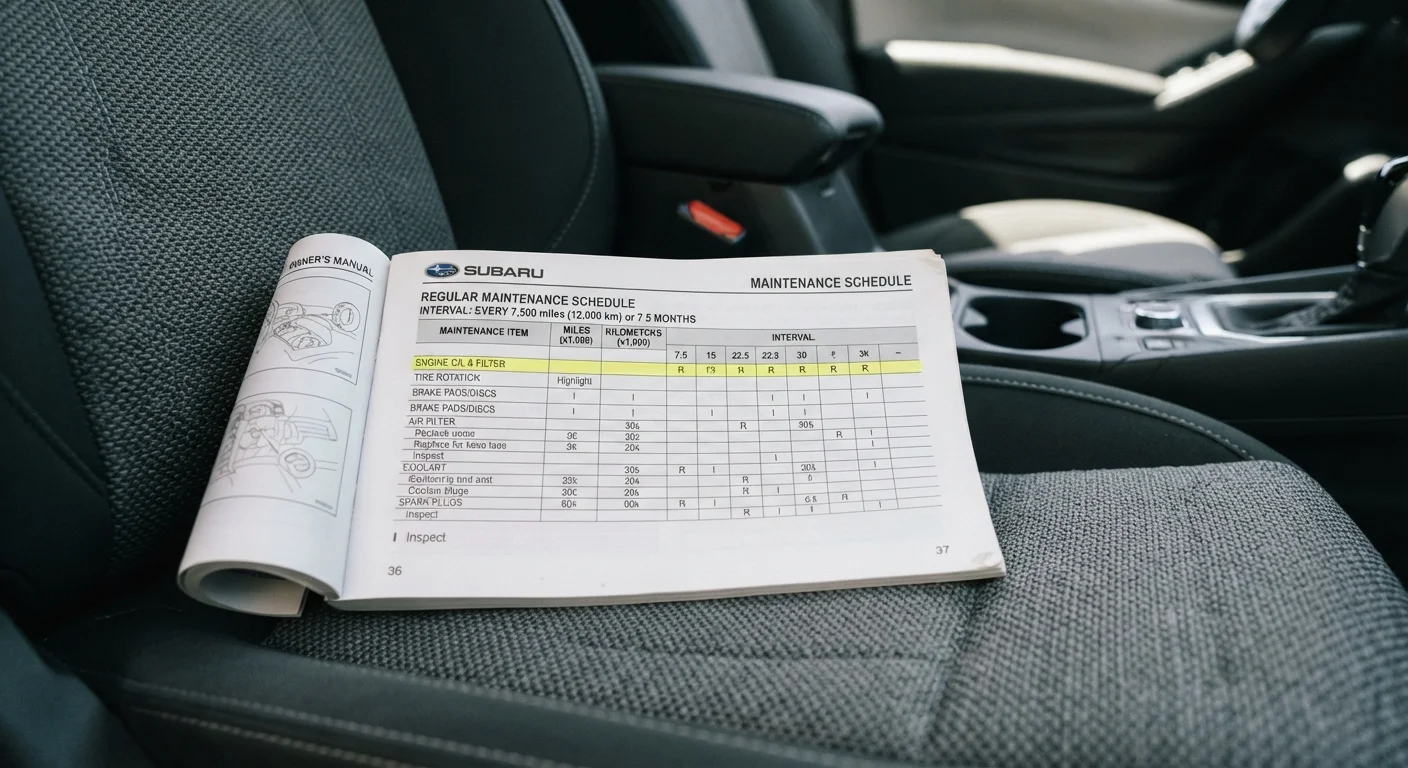
Key Takeaways
- Your owner's manual contains a manufacturer-specific maintenance schedule far more accurate than generic service reminders.
- Maintenance intervals are listed by mileage and time - both thresholds matter, whichever comes first.
- Severe-duty driving conditions can shorten recommended service intervals significantly.
- Tracking your odometer against the schedule helps you plan service visits and budget for upcoming costs.
- Understanding the schedule lets you have more informed conversations with your mechanic.
What you will need
Why Your Owner's Manual Beats Generic Advice
Walk into almost any quick-lube shop and you'll see a sticker recommending an oil change every 3,000 miles - a rule of thumb that, for most modern vehicles, is simply outdated. Manufacturer-engineered intervals are based on extensive testing of your specific engine, transmission, and fluid chemistry. Generic service reminders are not. Your owner's manual is the one document calibrated precisely to your car, not a generalized vehicle population.
This matters beyond oil changes. Coolant flush intervals, brake fluid replacement, spark plug type and timing, cabin air filter schedules - all of these differ meaningfully across makes and models. Relying on generalized advice instead of your manual can lead to either unnecessary spending or genuinely missed service. For a broader look at the documents and systems every owner should understand from the start, see our guide on setting up and tracking car ownership from day one.
Keep a Simple Maintenance Log
A small notebook in your glove box - or a notes app on your phone - works well for logging each service date, the odometer reading, and what was done. This makes it easy to see at a glance what's due next and provides a useful record if you ever sell the vehicle. Our guide on car ownership basics from day one covers additional tracking strategies.
What the Schedule Covers and What It Doesn't
A standard maintenance schedule addresses predictable, interval-based services: fluid changes, filter replacements, belt and hose inspections, tire rotations, and brake checks. What it generally does not cover is reactive repairs - a component that fails unexpectedly, a warning light that illuminates, or wear patterns caused by driving habits or road conditions. If your dashboard warning lights signal a problem between scheduled services, that requires separate attention regardless of where you sit on the mileage chart.
The schedule also won't tell you everything about your tires - rotation intervals are included, but interpreting sidewall markings or knowing when replacement is warranted goes deeper. Our article on what tire sidewall numbers mean fills that gap. Similarly, the schedule may reference a fuel type requirement - your owner's manual will specify whether regular or premium is recommended or required, which our gas grades guide covers in detail.
Use Both Thresholds - Mileage and Time
Every maintenance interval is expressed two ways: miles driven and elapsed time (e.g., every 5,000 miles or 6 months). Always follow whichever comes first. A car driven very little still ages - seals dry out, fluids absorb moisture, and belts degrade regardless of odometer readings.
Understanding the schedule's scope helps you use it correctly - as a preventive maintenance blueprint, not a complete diagnostic tool.
Severe-Duty Driving Changes Everything
If you frequently drive in stop-and-go traffic, tow or haul heavy loads, drive in extreme temperatures, or take many short trips under 5 miles, your vehicle may qualify as operating under 'severe' conditions. Your owner's manual typically contains a separate, shortened maintenance schedule for these situations - check it carefully so you don't inadvertently skip service your car actually needs.