

Key Takeaways
- Gutters redirect water away from your foundation, siding, and roof - preventing structural damage.
- Clogged or sagging gutters can cause basement flooding, mold growth, and soil erosion.
- Most gutters should be cleaned at least twice a year - in spring and fall.
- Downspout placement matters: water should discharge at least 4-6 feet from your foundation.
- Minor gutter issues left unaddressed can lead to much larger, more expensive repairs.
Home Gutters
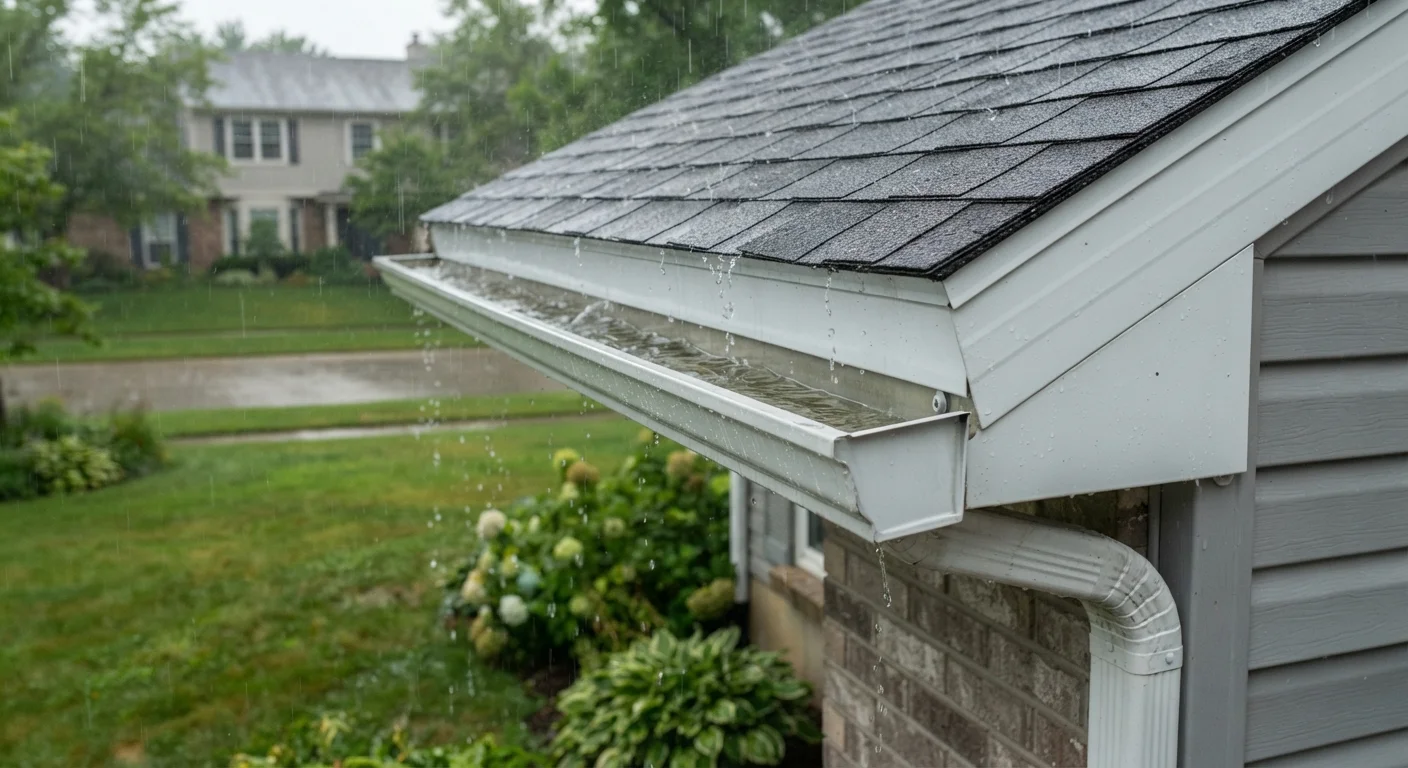
Gutters are the channels attached along your roofline that collect rainwater and snowmelt, then direct it away from your home through downspouts. Their job is simple but critical: keep water from pooling against your foundation, soaking your siding, or seeping under your roof. When they work correctly, you barely notice them. When they fail, the damage they allow can be costly and widespread.
Gutters are typically made from aluminum, vinyl, steel, or copper, and are sized (usually 5-6 inches wide) based on local rainfall intensity and roof pitch.
What Gutters Actually Do
Most homeowners think of gutters as an afterthought - a cosmetic trim piece along the roofline. In reality, gutters are one of your home's primary water-management tools. Every time it rains, your roof sheds hundreds of gallons of water. Without gutters, that water falls directly next to your home's perimeter, saturating the soil, eroding landscaping, and pushing moisture toward your foundation.
Gutters collect that runoff and channel it to downspouts, which carry it safely away from the structure. It's a straightforward system, but it only works when kept clear and properly aligned. Even a partial clog can cause water to overflow the edge, defeating the entire purpose.
As part of your home's larger water-management picture, gutters work alongside your roof, grading, and drainage systems. Understanding how they connect helps you see why neglect in one area can ripple outward. For a broader look at how your home's systems interact, see this overview of your home's four critical systems.
The Hidden Damage Neglected Gutters Cause
Water is patient. When gutters overflow consistently, the damage it causes tends to be slow and invisible - until it isn't. Here are the most common problems that trace back to failing gutters:
- Foundation damage: Saturated soil around your foundation expands and contracts with temperature changes, creating pressure that can crack concrete over time. Basement water intrusion often follows.
- Fascia and soffit rot: The wooden boards behind your gutters (fascia) and beneath the roofline overhang (soffit) are exposed to constant moisture when gutters overflow. They rot quietly and can compromise the structural edge of your roof.
- Siding deterioration: Water that runs down the exterior wall instead of through a downspout accelerates paint failure, warping, and mold growth on siding.
- Landscape erosion: Concentrated overflow strips away mulch, erodes garden beds, and can damage shallow plant roots directly below the roofline.
- Ice dams in winter: In colder climates, clogged gutters contribute to ice dam formation - where ice backs up under shingles and causes interior leaks. See common winterizing mistakes for more on cold-weather risks.
Gutter Guards: Helpful, Not Hands-Free
Gutter guards and covers can reduce how often you need to clean, but they don't eliminate the need entirely. Fine debris, shingle grit, and seeds can still accumulate over time. If you install gutter guards, plan to inspect and spot-clean them at least once a year to make sure water is still flowing freely.
Basic Gutter Maintenance Every Homeowner Should Know
The good news: keeping gutters functional doesn't require expertise - just consistency. Here's what routine gutter care looks like:
- Clean twice a year: Late spring (after tree pollen and seed pods drop) and late fall (after leaves finish falling) are the two most important cleanings. Remove debris by hand or with a gutter scoop, then flush with a garden hose.
- Check the slope: Gutters need a slight downward pitch - roughly a quarter inch of drop for every 10 feet - toward the downspout. Standing water in your gutter after rain signals a slope problem.
- Inspect downspout discharge: Water should exit at least 4-6 feet from your foundation. Downspout extenders are inexpensive and easy to add.
- Look for gaps and sags: Walk the perimeter after a heavy rain. Any section pulling away from the fascia or leaking at joints needs prompt attention.
Use a Hose to Test Gutter Flow
After cleaning your gutters, run a garden hose from the end opposite the downspout and watch how water moves through the channel. It should flow steadily toward the downspout with no pooling. This quick test reveals slope problems and partial blockages that aren't obvious by sight alone.
Skipping this kind of upkeep is one of the more common ways small problems quietly escalate. The relationship between deferred maintenance and repair costs is explored further in our guide on why skipping routine maintenance often costs more.
When to Call a Professional
Many gutter tasks - cleaning a single-story home, reattaching a loose spike, or adding a downspout extension - are well within reach for a capable DIYer with the right ladder and safety awareness. But some situations call for professional help:
- Multi-story homes where ladder safety is a serious concern
- Gutters with significant sagging, rust, or structural separation from the fascia
- Persistent basement moisture that may indicate a deeper drainage or grading issue
- Installation of gutter guards, seamless gutters, or full replacements
When evaluating contractors, ask for proof of licensing and insurance, get multiple written estimates, and ask specifically what the work includes. Don't let urgency push you toward shortcuts - common home maintenance myths can sometimes steer homeowners toward unnecessary or ineffective fixes.