

Key Takeaways
- Aeration is most beneficial for lawns with compacted, clay-heavy, or heavily trafficked soil.
- Core aeration outperforms spike aeration because it removes soil rather than just poking holes.
- Cool-season grasses benefit most from fall aeration; warm-season grasses from late spring aeration.
- Not every lawn needs annual aeration - loose, sandy, or low-traffic lawns may only need it every two to three years.
- Aeration works best when paired with overseeding or fertilizing immediately afterward.
Lawn Aeration
Lawn aeration is the process of creating small holes or removing plugs of soil from your lawn to reduce compaction. Compacted soil blocks grass roots from accessing air, water, and nutrients they need to grow strong. Aeration opens up that compressed soil, giving roots room to spread and thrive.
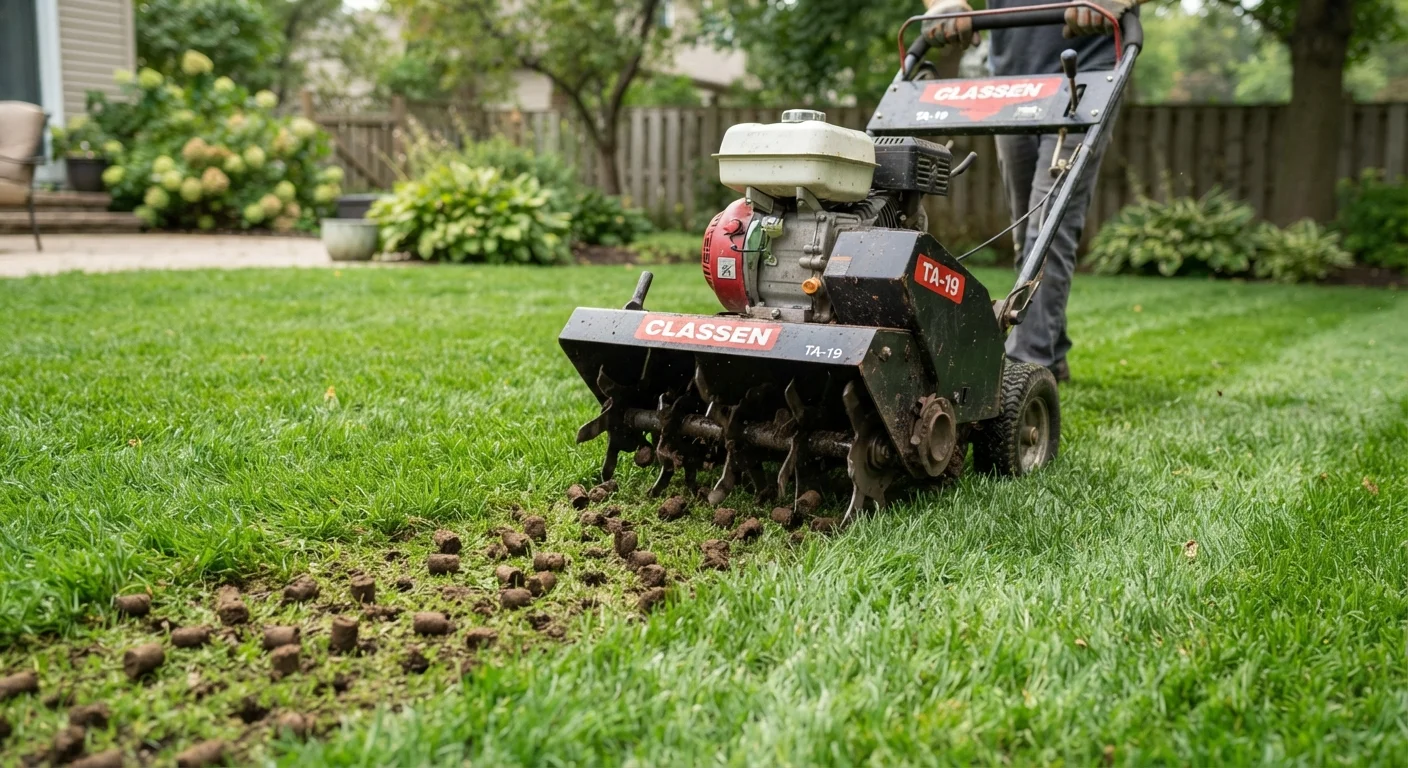
The most effective method - core (or plug) aeration - uses hollow tines to extract cylindrical plugs of soil roughly 2-3 inches deep, as opposed to spike aeration, which simply punctures the ground without removing material.
Why Soil Compaction Is the Real Problem
Grass struggles quietly when the soil beneath it gets too dense. Foot traffic, heavy mowing equipment, and even rainfall pounding bare soil over time can compress the tiny air pockets that root systems depend on. The result is a layered, brick-like soil structure where water runs off instead of soaking in, roots can't push deeper, and fertilizer sits at the surface rather than reaching the root zone.
Compaction is especially common in yards with clay-heavy soil, areas where kids or pets play frequently, and new-construction homes where builders have driven heavy equipment across the property. Understanding compaction is the first step - because aeration is the solution only when compaction is actually the problem.
For a fuller picture of what's happening underground, our guide to soil pH and plant health explains how soil chemistry compounds these issues.
Aeration Isn't a Fix for Every Lawn Problem
Compaction is one cause of poor lawn health, but not the only one. Soil pH imbalance, disease, drought stress, shade, and pest damage can all produce similar symptoms. If your lawn isn't responding after aeration, it's worth investigating other factors before repeating the process.
Core Aeration vs. Spike Aeration: Which Method Works
Not all aeration is equal. Spike aeration uses solid tines to punch holes into the ground. It's simple, but there's a catch: the tines push soil sideways and downward, which can actually increase compaction around the holes rather than relieving it.
Core aeration (also called plug aeration) uses hollow tines to pull out cylindrical plugs of soil - typically about two to three inches deep and half an inch wide. Those plugs are deposited on the lawn surface, where they break down over a few weeks. This removal of material is what genuinely opens up the soil structure.
For most homeowners dealing with real compaction, core aeration is the method worth the effort. Spike aerators have limited usefulness for anything beyond very mild surface issues.
Rent Before You Buy
A full-size core aerator is an expensive piece of equipment most homeowners only need once or twice a year. Equipment rental centers commonly carry them, and renting for a half-day is typically far more cost-effective than purchasing. Call ahead to reserve one during peak fall aeration season, as availability can be limited.
Signs Your Lawn Is a Good Candidate for Aeration
Aeration isn't a universal annual chore - it's a targeted fix. Here are the clearest indicators your lawn would genuinely benefit:
- Water pools or runs off: If rain or irrigation water sits on the surface or streams away quickly, the soil isn't absorbing it properly.
- The screwdriver test fails: Press a standard screwdriver six inches into the soil. If it takes real effort, compaction is present.
- Grass looks thin or stressed despite regular care: When watering, mowing, and fertilizing aren't producing results, poor root penetration may be the cause.
- Heavy thatch layer: More than half an inch of thatch - the layer of dead grass and debris between soil and blades - can block water and nutrients.
- High-traffic areas: Paths, play zones, and parking areas near lawn edges are common compaction hotspots.
If your lawn is growing in loose, sandy soil with light use and no drainage issues, skipping aeration or doing it every two to three years is perfectly reasonable.
½ inch
Thatch thickness that signals a problem
Turf management guidelines generally identify thatch layers exceeding half an inch as a barrier to water and nutrient penetration that warrants action.
2-3 inches
Depth of core aeration plugs
Standard core aerator tines extract plugs at this depth to meaningfully open compacted soil layers where roots typically concentrate.
1-3 years
Typical aeration frequency range
Lawn care guidelines suggest high-traffic or clay-heavy lawns may need annual aeration, while low-traffic sandy-soil lawns can go two to three years between treatments.
Timing Aeration Right for Your Grass Type
Aerating at the wrong time of year can stress your lawn rather than help it. The goal is to aerate when grass is in its active growing phase so it recovers quickly and fills in the holes.
- Cool-season grasses (Kentucky bluegrass, tall fescue, ryegrass): Aerate in early fall, typically late August through October. This also sets up ideal conditions for overseeding - check our spring lawn readiness guide for a full seasonal checklist.
- Warm-season grasses (Bermudagrass, zoysia, St. Augustine): Aerate in late spring to early summer once the lawn is fully out of dormancy and actively growing.
Avoid aerating cool-season grasses in the heat of summer or during dormancy - the lawn won't have the energy to recover. Similarly, don't aerate warm-season grasses in fall, when they're heading toward dormancy.
What to Do Right After You Aerate
The timing right after aeration is one of the best opportunities in lawn care. The open channels created by core aeration allow direct access to the root zone, making post-aeration treatments significantly more effective than they would be on an untreated lawn.
Here's how to make the most of it:
- Leave the plugs in place. They look messy for a few weeks, but they break down naturally, returning organic material and microbes to the soil.
- Overseed immediately. Seeds dropped into aeration holes have direct soil contact and a much higher germination rate. This is especially valuable for thin or patchy areas.
- Apply fertilizer. Nutrients will reach the root zone far more efficiently through the open channels. Our guide to fertilizer N-P-K numbers can help you choose the right formula.
- Water consistently. Keep the lawn moist for a week or two after aerating to support seed germination and recovery.
For shaded yards that struggle even after aeration, growing grass in shaded areas covers grass variety options and practical workarounds.