

Key Takeaways
- Soil pH controls whether plant roots can access the nutrients already in your soil.
- Most lawn grasses and vegetables thrive in a slightly acidic range of 6.0-7.0.
- A simple at-home test kit or a cooperative extension soil test can reveal your pH level.
- Lime raises pH in acidic soil; sulfur or acidifying fertilizers lower it in alkaline soil.
- Adjustments take time - retest several months after amending to track progress.
- Understanding pH works hand-in-hand with fertilizing, aeration, and overall lawn care.
Soil pH
Soil pH is a measure of how acidic or alkaline your soil is, expressed on a scale from 0 to 14. A reading of 7.0 is neutral - numbers below that indicate acidic soil, and numbers above indicate alkaline (basic) soil. Most garden plants and lawn grasses perform best in a fairly narrow pH range, typically between 6.0 and 7.0.
pH directly controls which nutrients become chemically available to plant roots; even nutrient-rich soil can starve plants if the pH is too far off from their preferred range.
The Hidden Reason Fertilizer Isn't Working
You water consistently, fertilize on schedule, and still your lawn patches stay yellow and your tomatoes look defeated. Before you add more amendments, consider this: the problem may not be what is in your soil - it's whether your plants can actually access it.
Soil pH acts as a gatekeeper for nutrient availability. When pH drifts outside a plant's preferred range, nutrients like nitrogen, phosphorus, iron, and manganese become chemically bound to soil particles. The nutrients are physically present, but the plant's roots cannot take them in. You can read more about how nutrients interact with your lawn in our guide to understanding fertilizer N-P-K numbers.
6.0-7.0
Ideal pH range for most lawn grasses
University extension guidelines consistently cite this range as optimal for nutrient availability in common turfgrasses.
10×
Acidity difference per pH unit step
Because pH is a logarithmic scale, a one-unit drop (e.g., from 7.0 to 6.0) represents a tenfold increase in hydrogen ion concentration.
3-6 months
Typical time for amendments to take effect
Soil amendment guides from cooperative extension programs note that lime and sulfur both require months of soil activity to measurably shift pH readings.
What the pH Scale Actually Means
The pH scale runs from 0 (extremely acidic) to 14 (extremely alkaline), with 7.0 being neutral. For home gardeners, the actionable range is much narrower. Most lawn grasses - including Kentucky bluegrass, tall fescue, and bermudagrass - prefer soil between 6.0 and 7.0. Vegetables and many flowering plants share a similar preference, though blueberries, azaleas, and rhododendrons are notable exceptions that need more acidic conditions (around 4.5-5.5).
Even small shifts matter. Moving from 6.0 to 5.0 represents a tenfold increase in acidity because the pH scale is logarithmic. That means a soil reading of 5.0 isn't just slightly more acidic than 6.0 - it's significantly more hostile to most common garden plants.
Regional Soil Tendencies Vary Widely
Soils in the humid Eastern US tend to be naturally acidic, while soils in arid Western states often lean alkaline. Heavy rainfall leaches calcium and magnesium - the minerals that raise pH - from the soil over time. Knowing your region's general tendencies can help set expectations before you test, but always confirm with an actual reading rather than assuming.
How to Test Your Soil
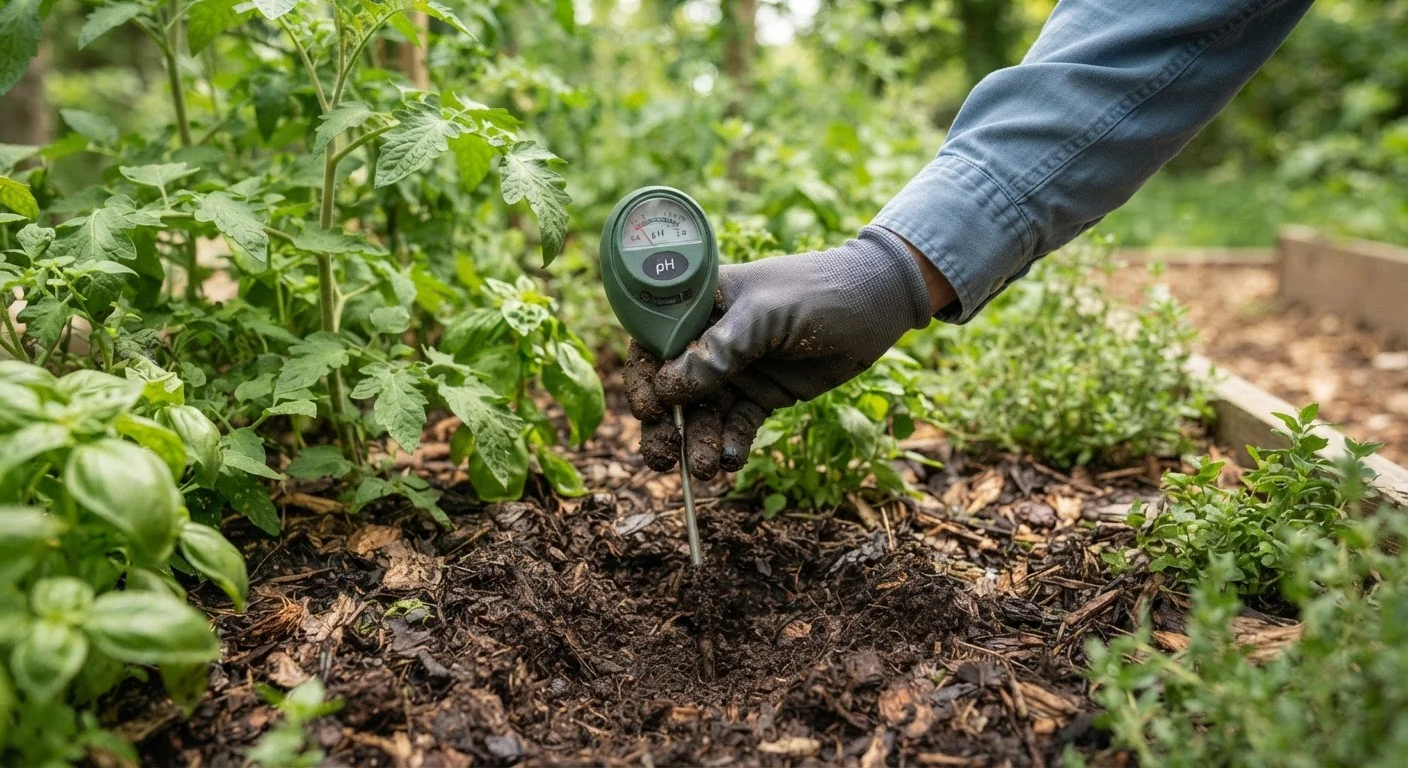
Testing is the essential first step - amending soil without knowing its pH is guesswork that can make things worse. You have two practical options:
- At-home test kits or probes: Available at garden centers, these give you a quick reading within minutes. Digital probes tend to be more reliable than basic color-strip kits. They're a good starting point, though accuracy can vary.
- Cooperative extension soil test: Many state land-grant universities operate extension offices that test soil samples for a modest fee or sometimes at no cost. These tests return a detailed report covering pH, nutrient levels, and amendment recommendations tailored to your region and intended plants. This is the most reliable route.
Collect samples from several spots in your yard - pH can vary considerably even within a single garden bed. Mix the samples together for a composite reading, or test each area separately if you suspect variation.
Raising and Lowering Soil pH
Once you know where your pH stands, correction is straightforward - though not instant.
For Acidic Soil (pH below 6.0)
Apply ground limestone (commonly called garden lime or agricultural lime). Calcitic lime adds calcium; dolomitic lime adds both calcium and magnesium. The amount needed depends on your current pH, your target pH, and your soil type - clay soils require more lime than sandy soils. Your extension office test results will typically include a specific rate recommendation.
For Alkaline Soil (pH above 7.5)
Elemental sulfur is the most common amendment. Soil bacteria convert it to sulfuric acid over time, gradually lowering pH. Acidifying fertilizers can also help maintain lower pH over the long term. As with lime, rates depend on your soil type and how much adjustment is needed.
Spread amendments evenly and work them into the top few inches of soil where possible. Retest in three to six months - do not assume one application is enough, and avoid applying more than the recommended rate at once.
If you're planning to test and amend ahead of a new planting season, our spring lawn readiness walkthrough can help you sequence these tasks effectively.
pH and the Bigger Picture of Lawn Health
Soil pH rarely works in isolation. Compacted soil, poor drainage, and heavy thatch can all compound pH problems by limiting root depth and water penetration. Addressing pH alongside other soil health practices gives your lawn and garden the best foundation. Our guide on when and why to aerate your lawn explains how loosening compacted soil can work alongside pH correction for stronger grass growth.
For homeowners building new garden spaces, pH management looks slightly different depending on your setup. Raised beds vs. in-ground planting covers how each approach affects your control over soil composition, including pH starting points.
Troubleshooting struggling plants always benefits from a systematic approach: test first, amend with purpose, and give changes time to work before drawing conclusions. A simple soil pH test is one of the most cost-effective diagnostics available to any home gardener.