

Key Takeaways
- Organic mulches like bark and straw decompose over time, improving soil structure and fertility.
- Rubber and gravel mulches last longer but don't add nutrients and can retain excess heat.
- Applying mulch 2-4 inches deep suppresses weeds effectively without suffocating plant roots.
- Straw works well in vegetable gardens; bark nuggets suit ornamental beds and tree rings.
- No single mulch type is best for all situations - match the material to your specific garden goals.
Our Verdict
Organic mulches such as shredded bark and straw remain the most versatile choice for most home gardeners, delivering weed suppression, moisture retention, and long-term soil improvement. Inorganic options like rubber or gravel make sense in specific situations - high-traffic paths, low-maintenance landscapes, or playgrounds - but they don't feed the soil. Match your mulch to your plants, your climate, and how much annual upkeep you're willing to do.
| Best for | Recommended |
|---|---|
| Vegetable and annual flower beds | Straw or shredded leaves |
| Ornamental shrub and tree beds | Shredded bark or bark nuggets |
| Low-maintenance or permanent landscaping | Rubber mulch or gravel |
| Budget-conscious gardeners who compost | Shredded leaves or grass clippings |
Why Mulch Matters More Than Most Gardeners Realize
Mulch is one of the most cost-effective tools a homeowner can use to reduce garden maintenance and improve plant health. A consistent layer across your beds conserves soil moisture, moderates ground temperature, discourages weed germination, and - in the case of organic materials - gradually enriches the soil as it breaks down.
The core decision is whether to go organic (materials that decompose, like wood, straw, or leaves) or inorganic (materials that don't break down, like rubber or stone). Each category has meaningful trade-offs, and the right answer varies by garden type, budget, and how hands-on you want to be season to season. If you're also weighing how your planting setup affects mulch needs, our guide on raised beds vs. in-ground planting is a helpful starting point.
Organic Mulch Options: Bark, Straw, Leaves, and More
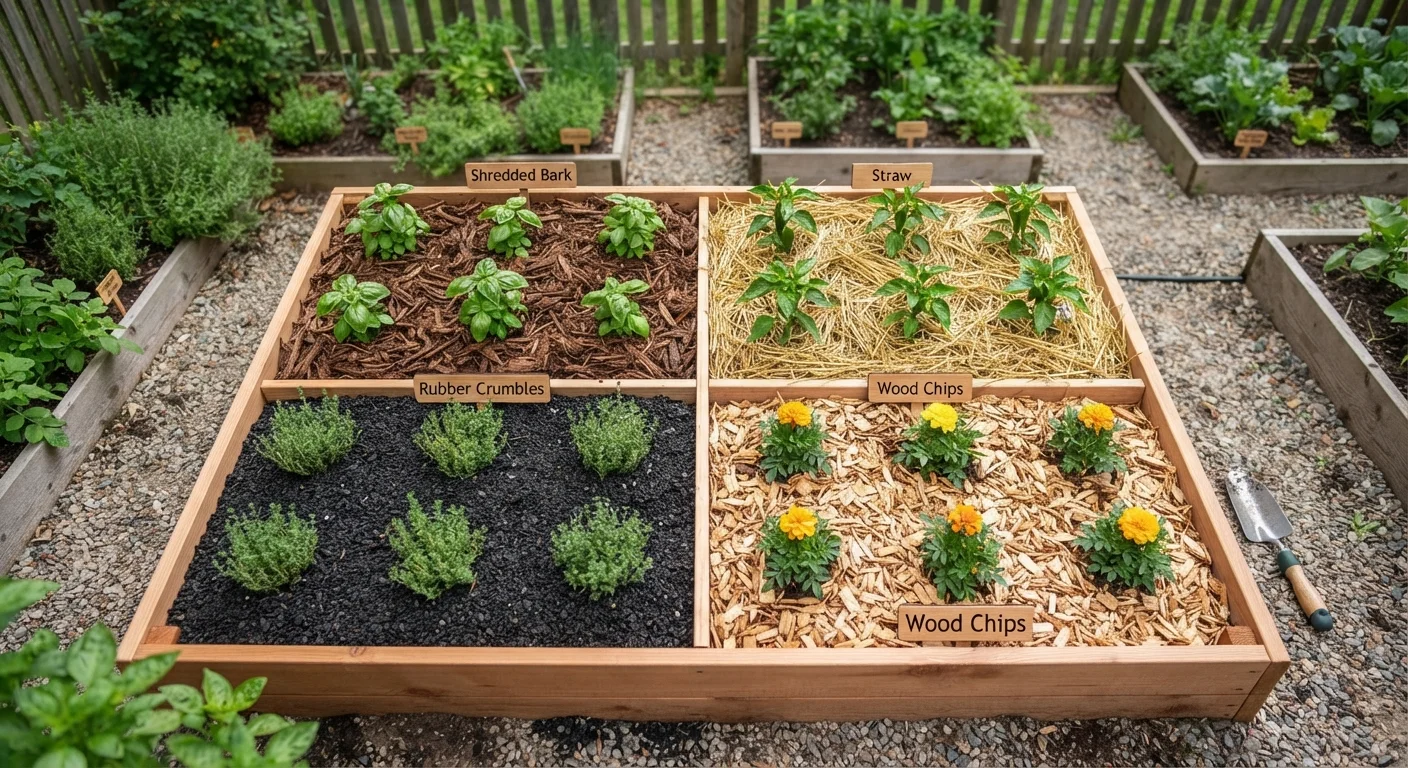
Shredded bark and bark nuggets are among the most widely used mulches in American home gardens. Shredded bark knits together well, resists displacement by wind, and decomposes slowly - typically needing a refresh every one to two years. Larger bark nuggets last even longer but can float away in heavy rain and are slower to improve soil. Both work well around trees, shrubs, and perennial beds.
Straw (not hay, which carries weed seeds) is a go-to for vegetable gardens. It's lightweight, easy to spread, and breaks down within a single season, adding organic matter to the soil. It also keeps soil-borne pathogens from splashing onto vegetable foliage during rain.
Shredded leaves are a free resource for most homeowners in fall. Run dry leaves through a mower or leaf shredder to prevent matting, then apply a 3-4 inch layer. They decompose faster than bark, so you'll replenish more often - but the soil benefit is significant. If you're building a composting habit alongside your mulching, see our article on composting at home for how to make the most of organic yard waste.
Grass clippings work as a thin mulch layer (no more than 1-2 inches) in vegetable beds. Applied too thickly, they mat down and block water penetration.
Wood chips from arborists are often free or low-cost and excel around trees. Avoid mixing fresh wood chips directly into soil, as they can temporarily tie up nitrogen during decomposition.
Freshen Mulch Without Starting Over
Before adding new mulch each season, use a rake to fluff and turn the existing layer. This prevents compaction and helps the material continue to breathe. You often only need to add an inch or so on top, saving both material and cost.
Inorganic Mulch Options: Rubber, Gravel, and Landscape Fabric
Rubber mulch, typically made from recycled tires, is marketed heavily for its longevity - it doesn't decompose and rarely needs replacing. It also holds its color well. The trade-offs are significant, however: it adds no organic matter to soil, can retain heat in ways that stress plant roots during summer, and some gardeners have concerns about long-term leaching from tire-derived materials. It's most appropriate in play areas or decorative zones with no active plantings.
Gravel and crushed stone work well in dry climates, around drought-tolerant plants, or in path areas. They allow water to pass through and don't decompose, but they also absorb and radiate heat and can be difficult to remove once installed. Weeds that do establish in gravel are harder to pull than those in bark.
Landscape fabric is often used beneath other mulches as a weed barrier. While it can reduce weed pressure initially, over time organic matter accumulates on top, creating a seedbed for weeds anyway. It can also interfere with beneficial soil organisms and make adding plants or amendments difficult. Many experienced gardeners prefer skipping it in favor of sufficient mulch depth.
| Shredded Bark | Straw | Rubber | Gravel/Stone | Shredded Leaves | |
|---|---|---|---|---|---|
| Cost | Low-moderate | Low | Moderate-high | Moderate | Free |
| Lifespan | 1-2 years | 1 season | 5-10 years | Indefinite | Less than 1 year |
| Soil improvement | Yes, gradual | Yes, fast | None | None | Yes, fast |
| Weed suppression | Good | Good | Good | Moderate | Good |
| Heat retention | Low-moderate | Low | High | High | Low |
| Best use case | Ornamental beds | Vegetable gardens | Play areas, paths | Dry or xeriscape gardens | Any bed, low budget |
| Maintenance level | Low | Annual refresh | Very low | Low | Frequent refresh |
Application Tips That Make Any Mulch Work Better
Regardless of which mulch you choose, how you apply it matters just as much as what you use.
- Depth: Aim for 2-4 inches in most beds. Too thin and weeds push through; too thick and water struggles to penetrate. Around plant stems and tree trunks, keep mulch 2-3 inches away to prevent rot and pest harborage - the so-called "mulch volcano" piled against tree bases is a common mistake to avoid.
- Timing: Spring application after soil has warmed helps retain moisture through summer. Fall application after the first frost helps protect root systems through winter.
- Weed prep: Remove existing weeds before mulching - mulch suppresses new germination but won't kill established plants.
- Refresh, don't pile: Each season, rake and loosen existing mulch before adding a new thin layer on top.
If you're exploring alternatives to mulch for ground coverage in lower-traffic areas, ground covers beyond grass offers options that can reduce both mulch needs and mowing. And for beds struggling with compacted soil underneath, lawn aeration may be a useful companion step before mulching.