

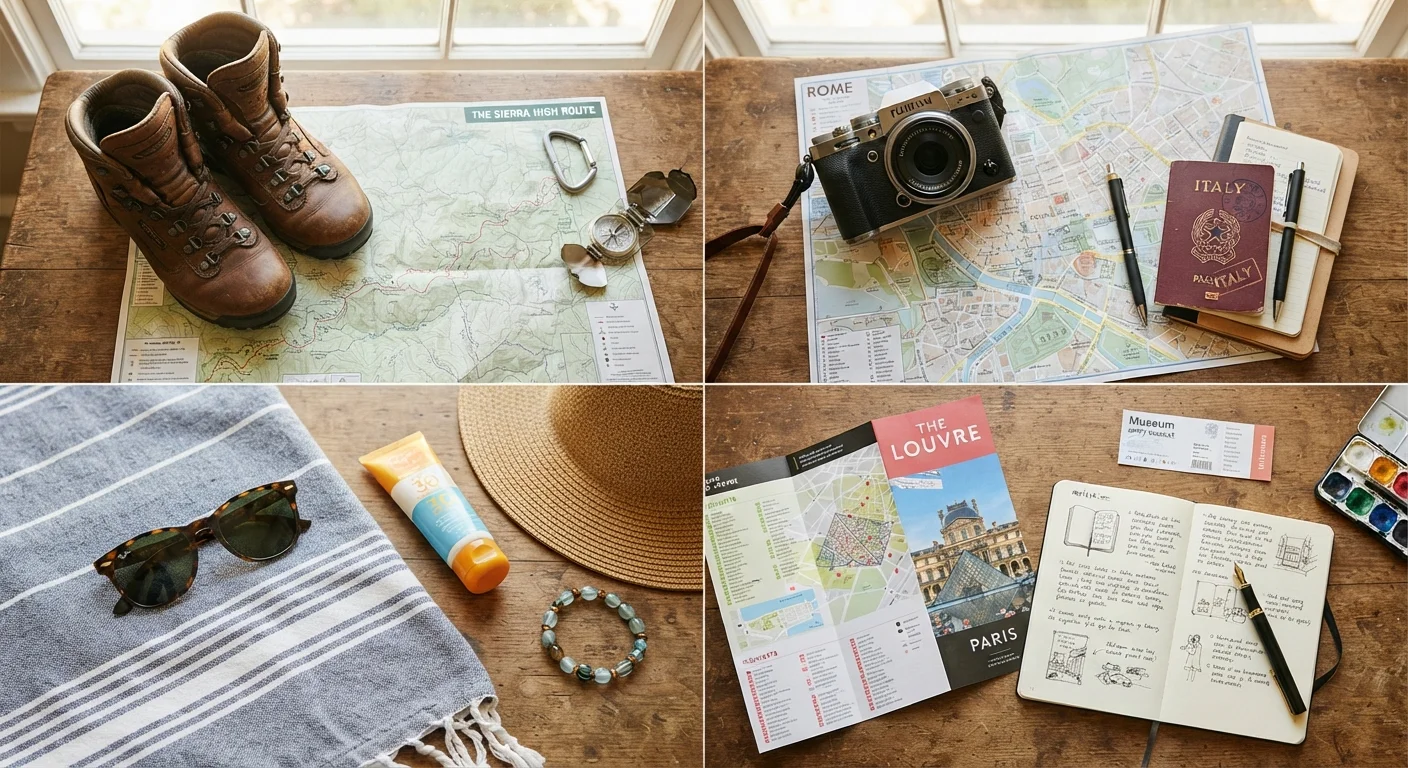
Key Takeaways
- Knowing your travel style before you book reduces mismatched expectations and disappointment.
- Most travelers fit more than one style - identifying your primary one narrows destination choices effectively.
- Destination environments (urban, coastal, wilderness, historic) each serve different travel motivations.
- Travel style also shapes accommodation, pace, and how much planning is realistic for you.
- Honest self-assessment - not aspirational fantasy - produces the most satisfying trips.
Travel Style
Your travel style is the combination of activities, paces, and environments that make a trip feel satisfying rather than draining. It reflects what you genuinely want from time away - whether that's movement, rest, cultural immersion, or outdoor challenge. Identifying your style before booking helps you choose destinations that match your real preferences, not just a destination's marketing.
Travel researchers sometimes categorize travelers using typologies such as allocentrics (novelty-seekers) and psychocentrics (comfort-seekers), a framework introduced by tourism researcher Stanley Plog to describe motivational differences among travelers.
Why Travel Style Matters Before You Book
Most trip regrets don't come from choosing a "bad" destination - they come from choosing a destination that doesn't fit the traveler. Someone who genuinely recharges through hiking and solitude will feel restless on a resort beach. Someone who loves walkable neighborhoods and restaurant discovery will feel stranded in a remote national park with no infrastructure.
Identifying your travel style is a practical exercise, not a personality quiz. It helps you ask better questions before committing: Does this place reward how I like to spend my days? Does its pace match mine? Is the infrastructure there for what I actually want to do?
That clarity flows directly into trip planning decisions - from destination shortlisting to how you structure your days once you arrive.
Start With a Honest Look at Past Trips
Before researching any destination, spend five minutes recalling your last two or three trips. Write down one thing you genuinely loved and one thing that felt like a mismatch. Those patterns are more reliable than any online quiz for identifying your real travel style.
The Four Core Travel Styles
While every traveler is unique, four broad styles account for the most common travel motivations. Think of these as starting points, not rigid boxes.
The Active Adventurer
This traveler prioritizes physical engagement with the landscape - hiking, cycling, kayaking, climbing, or multi-day trekking. Destinations that work best offer varied terrain, accessible trail systems, and outdoor infrastructure. National parks, mountain regions, and coastal areas with water sports are natural fits. Comfort-level amenities matter less than access and logistics.
The Culture and History Seeker
Drawn to museums, historic districts, local customs, and the stories embedded in place, this traveler wants depth over quantity. They tend to move slowly, revisit a neighborhood multiple times, and find meaning in context. Cities with layered histories - and destinations that reward curiosity beyond the surface - suit them well. Reading past tourism branding is especially valuable for this style.
The Rest-and-Recharge Traveler
Not every trip needs to be packed. This traveler defines success as genuine decompression - slower mornings, minimal scheduling, unhurried meals, and environments that feel restorative. Beach destinations, lakeside towns, and spa-oriented retreats serve this motivation. The key is matching the destination's natural rhythm to the traveler's need for quiet. See how coastal and highland destinations compare when weighing options.
The Urban Explorer
This traveler thrives on city density - walkable streets, diverse food scenes, public transit, art, architecture, and the spontaneous energy of neighborhoods. They tend to under-schedule deliberately, leaving room for discovery. For this style, neighborhood selection matters enormously. What goes wrong with urban travel is often about picking the wrong base or over-relying on top-ten lists.
76%
Travelers who say trip satisfaction depends on activity fit
According to U.S. Travel Association research, the majority of American travelers cite alignment between destination offerings and personal interests as a key satisfaction driver.
1 in 3
Travelers who feel their last trip was over-scheduled
Surveys by travel industry analysts have consistently found that over-scheduling is among the most common sources of post-trip regret reported by American leisure travelers.
62%
Travelers who research destinations based on activities first
Destination research studies suggest the majority of trip planners prioritize activity availability before considering accommodation or transportation options.
How to Identify Your Actual Style (Not Your Aspirational One)
Many travelers plan trips based on who they wish they were rather than who they actually are. Someone who hasn't exercised in months books a demanding hiking itinerary. A chronic overthinker books an "unplanned" trip with no structure and spends it anxious.
A more useful approach: reflect on past trips. Which moments felt most alive or most draining? What did you find yourself seeking out - or avoiding? If you've never traveled before, think about how you spend your ideal weekend at home. That pattern usually translates.
Also consider your honest tolerance for discomfort, ambiguity, and physical effort. A good destination match accounts for these realities, not a flattering self-image.
Once you've landed on your primary style, you can build a realistic itinerary around it. The anatomy of a well-built itinerary explains how to give that style structure without over-scheduling the life out of a trip.
Hybrid Styles Are Common - and Manageable
Many travelers genuinely sit between two styles - an active adventurer who also values cultural context, or an urban explorer who needs one full rest day mid-trip. Recognizing this lets you build itineraries that honor both needs rather than forcing an all-or-nothing approach. Prioritize your dominant style for destination selection, then design day-level variety around it.
Matching Style to Destination: Practical Considerations
Once you have a clearer sense of your style, match it against a destination's actual offerings - not just its reputation. A few questions worth asking for any shortlisted destination:
- Activity availability: Does this place genuinely support the activities central to your style, or are they peripheral add-ons?
- Infrastructure fit: Are public transit, trails, or cultural institutions well-developed and accessible, or do they require significant extra effort?
- Pace and scale: Is the destination sized and paced in a way that matches how you like to move through a place?
- Seasonal suitability: Many destinations are better suited to certain styles at certain times of year - beach destinations in storm season, or popular hiking routes in peak crowds, can fundamentally change the experience.
Accommodation choices reinforce style alignment too. Matching accommodation to your trip type makes a larger difference than many travelers expect - where you sleep affects how easily you can access what you came for.
Finally, verify any safety, entry, or logistics requirements for your destination through official government sources and airline or transport providers before you book, as conditions can change.